Introduction: The Trust Revolution in Modern Betting
For years, the relationship between a bettor and a sportsbook has been built on a fragile foundation of trust. As someone who has analyzed thousands of matches and deep-dived into statistical models for the Spanish-speaking market, I have often encountered the “black box” of traditional platforms. Whether it was delayed payouts, disputed results, or the lack of transparency in how odds are adjusted, the friction point was always the same: the middleman. This changed for me two years ago when I placed my first wager via a decentralized protocol using Smart Contracts. 🏟️
In this post, I want to share my unique professional experience transitioning from traditional bookmakers to Smart Contract-based platforms. We aren’t just talking about a new way to pay; we are talking about a fundamental shift in the “rules of the game.” By removing human intervention from the execution of a bet, we eliminate the biases and errors that often plague the betting industry. For our community of analytical bettors aged 25-45, understanding this technology isn’t just a technical curiosity—it is a competitive advantage that ensures your mathematical edge isn’t blunted by administrative hurdles.
What Exactly is a Smart Contract in the Betting Context?
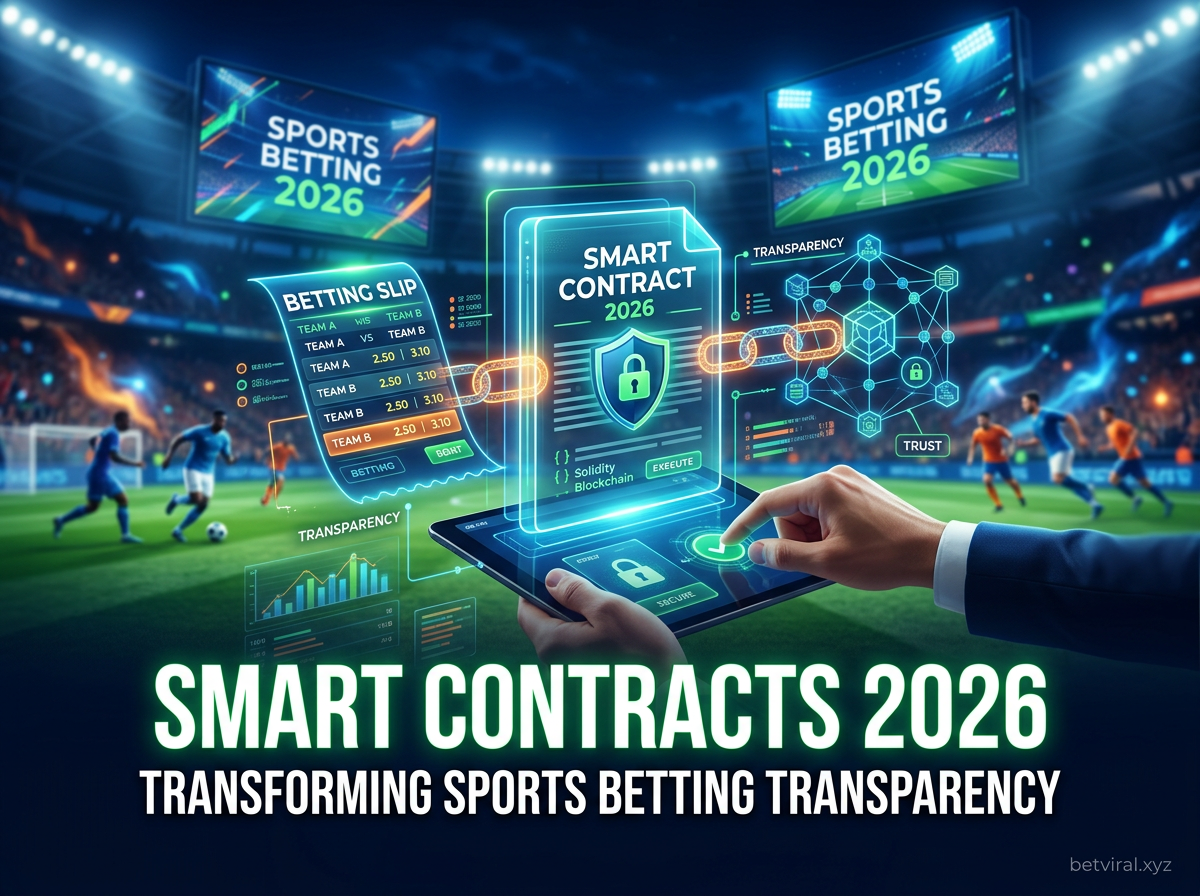
Before diving into my personal experiences, it is vital to define what we are working with. A Smart Contract is a self-executing contract with the terms of the agreement between the bettor and the platform directly written into lines of code. It exists on a blockchain (like Ethereum or Polygon) and automatically triggers actions when specific conditions are met.
In my experience, the most significant shift is the elimination of the “Withdrawal Request.” In traditional betting, after a big win on a La Liga parlay, you have to request your funds and wait for a manual review. With a Smart Contract, the moment the final whistle blows and the “Oracle” (the data feed providing the score) confirms the result, the funds are instantly pushed to your wallet. There is no human “approval” needed because the code is the law. 💻
The Role of the Oracle
You might wonder: “How does the code know if Real Madrid won?” This is where Oracles come in. These are trusted data providers that bridge the gap between the real world and the blockchain. My transition to this technology required me to vet not just the odds, but the reliability of the Oracles used by the platform. It adds a new layer of professional analysis to our betting strategy.
My Experience: Three Ways Smart Contracts Changed My Strategy
Transitioning to Smart Contracts wasn’t just about faster payments; it fundamentally changed how I manage my bankroll and evaluate risk. Here are the three most impactful changes I’ve observed in my professional journey:
1. Guaranteed Liquidity and Solvency
One of the biggest fears for a high-volume bettor is “counterparty risk”—the risk that the bookmaker doesn’t have the funds to pay out a massive win. In a Smart Contract ecosystem, the payout is often locked in escrow the moment the bet is placed. I remember a specific instance during the Champions League final where a large-scale decentralized platform had all potential winnings held in a transparent, verifiable contract. Being able to see that the money is already there, waiting for the result, provides a level of security that no traditional bank statement can match.
2. The End of Arbitrary Account Limits
If you are a successful bettor, you know the frustration of having your account limited or “gated” by a bookmaker because you win too often. Because Smart Contracts are decentralized and often permissionless, the “house” cannot easily identify and shadow-ban winning players based on personal profiles. This has allowed me to maintain a consistent betting volume without the fear of being penalized for my analytical success. 📈
3. Verifiable Fairness (Provably Fair)
In the world of gaming and digital odds, the “house edge” is often hidden. Smart Contracts allow for Provably Fair algorithms. I have spent hours auditing the open-source code of these contracts to ensure that the RNG (Random Number Generation) or the odds calculation isn’t being manipulated behind the scenes. For a data-driven bettor, this transparency is the “Holy Grail.”
Practical Tips for Engaging with Smart Contract Betting
If you are looking to integrate this technology into your routine, you cannot approach it the same way you do a standard website. Based on my trials and errors, here is a guide to doing it right:
- Audit the Contract: Always check if the platform’s Smart Contract has been audited by a third-party security firm (like CertiK or OpenZeppelin). Never put your capital into unverified code.
- Understand Gas Fees: Transactions on the blockchain cost “gas.” During high-traffic events, like the World Cup, these fees can spike. Always factor these costs into your ROI calculations.
- Self-Custody is Key: You are your own bank. Use a hardware wallet to interact with these contracts. My most important lesson was learning that the security of my winnings depended entirely on my private key management.
- Check the Oracle Source: Ensure the platform uses multiple Oracles (like Chainlink) to prevent a single point of failure in reporting match results.
Let’s look at a quick comparison to illustrate the difference in a real-world scenario:
- Traditional Scenario: You bet $100 on a 3.50 underdog. They win. You wait 48 hours for the “Review Period,” provide a photo of your ID, and wait another 3 days for the bank transfer.
- Smart Contract Scenario: You bet $100. The contract holds the $350 payout. The match ends. Within 60 seconds, $350 is in your digital wallet. No ID requested, no delays. ⚡
The Challenges: It’s Not All Smooth Sailing
Despite my positive experiences, I must be professional and honest about the hurdles. The learning curve is steep. You need to understand digital wallets, network switching, and the permanent nature of blockchain transactions. There is no “Forgot Password” button on a Smart Contract. If you send funds to the wrong address, they are gone forever. This is why Responsible Gaming in this niche also includes technical responsibility.
“In the world of decentralized betting, code replaces the handshake. It is more reliable than a promise, but it demands a higher level of user education.”
Conclusion: The Future is Decentralized
My journey into Smart Contracts has been one of the most rewarding shifts in my professional career as a sports analyst. It has moved me away from a system where I had to “ask for my money” to a system where I simply “receive my earnings.” For the sophisticated Spanish-speaking bettor, this technology represents the ultimate tool for transparency and efficiency.
As we move forward, the integration of statistical models with automated execution will become the standard. I encourage you to start small: set up a secure wallet, research a reputable decentralized betting protocol, and experience the speed of a Smart Contract payout for yourself. Transitioning to this model doesn’t just make you a more modern bettor; it makes you a more protected one.
Are you ready to take control of your betting transparency? Start by auditing your current platform’s payout terms and compare them to the instant execution of a Smart Contract. The era of waiting for your own money is over! 🚀
Honestly, seeing this breakdown of smart contracts makes me feel way better about my small ETH bag! 😅 I was just telling my roommate, Leo, that the ‘if/then’ logic is basically like a digital vending machine but for everything. Can’t wait to see these replace those annoying manual lease agreements I had to sign last month. 🏠⛓️ To the moon! 🚀
While your breakdown of the ‘code is law’ philosophy is solid, I think your analysis overlooks the specific vulnerability patterns I’ve seen in real-world governance tokens, particularly the reentrancy risks we saw in the recent protocol upgrade I was auditing last Tuesday. I would have loved to see you dive deeper into the trade-offs between ‘upgradeability patterns’ and true decentralization, as the proxy contract solution you suggested often introduces a centralization vector that most beginners aren’t prepared to manage. Next time, maybe include a snippet on how OpenZeppelin’s latest standards mitigate these specific logic flaws? (ID: pg3xad)